

Mission-Critical Cooling Consulting That Finds the Risk Others Miss
When cooling failures repeat, alarms conflict, or operating margin is disappearing, KMC² connects the evidence across equipment, controls, fluid conditions, and real-world operation—so your team knows what to address first.
Bring the problem—not a polished diagnosis. You will speak directly with Martin P. King.
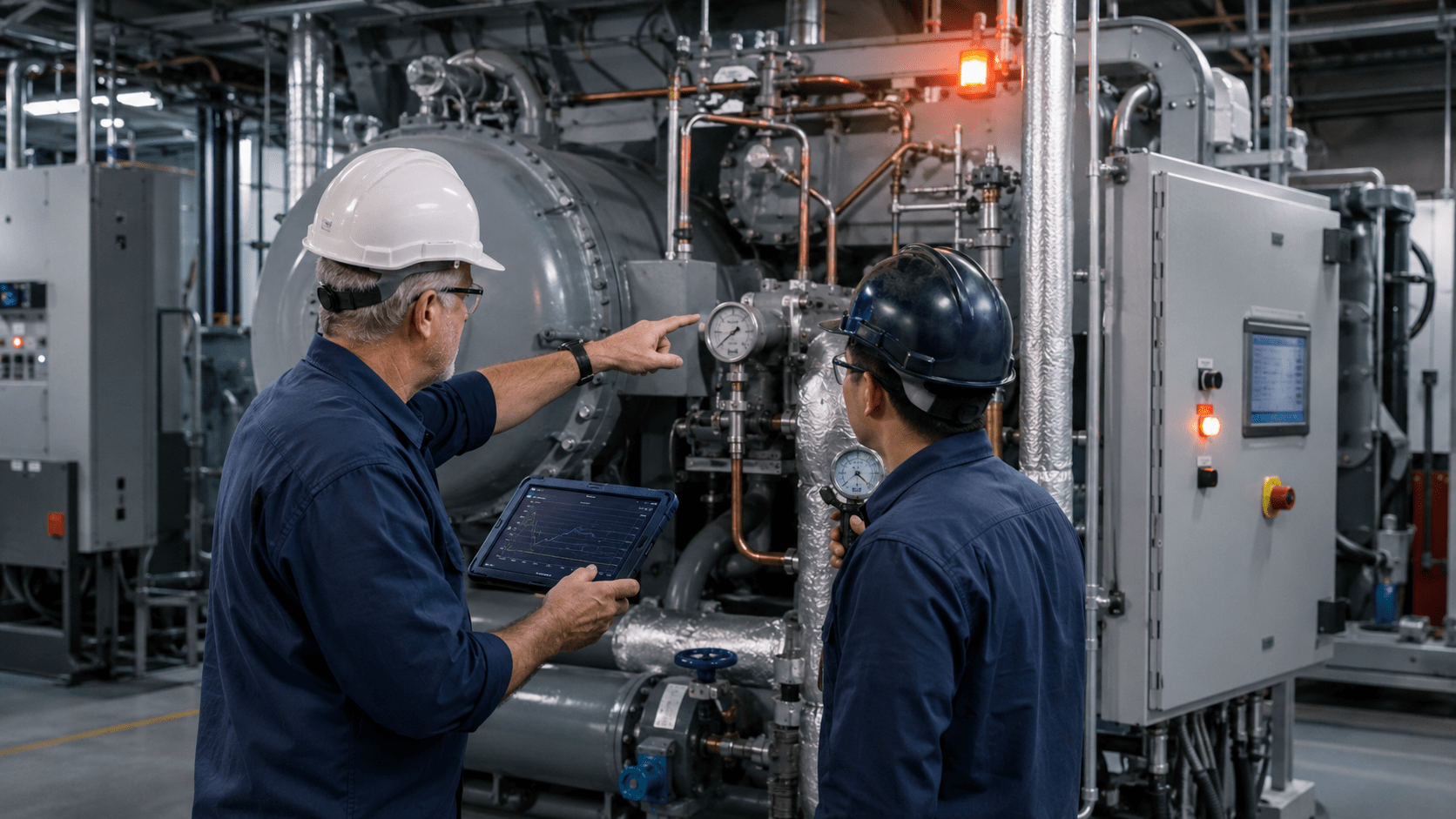
Does Any of This Sound Familiar?
You do not need to know which service you need. Start with the cooling behavior, exposure, or unanswered question consuming your team’s attention.
A Failure or Alarm Keeps Returning
The failed part has been repaired or replaced, but the pattern is not explained—and confidence is falling.
Operating Margin Is Disappearing
The system still runs, but valves, pumps, temperatures, or recovery times show that the safety margin is shrinking.
The Explanations Do Not Agree
Contractors, OEMs, controls providers, and facility teams each have a theory, but no one owns the complete picture.
The System Passed—But Wasn’t Proven
Equipment started and checklists passed, yet failover, recovery, or real-load behavior remains untested.
Where Cooling Performance Directly Affects the Mission
KMC² focuses on environments where a cooling problem can interrupt patient care, production, testing, or high-value compute.
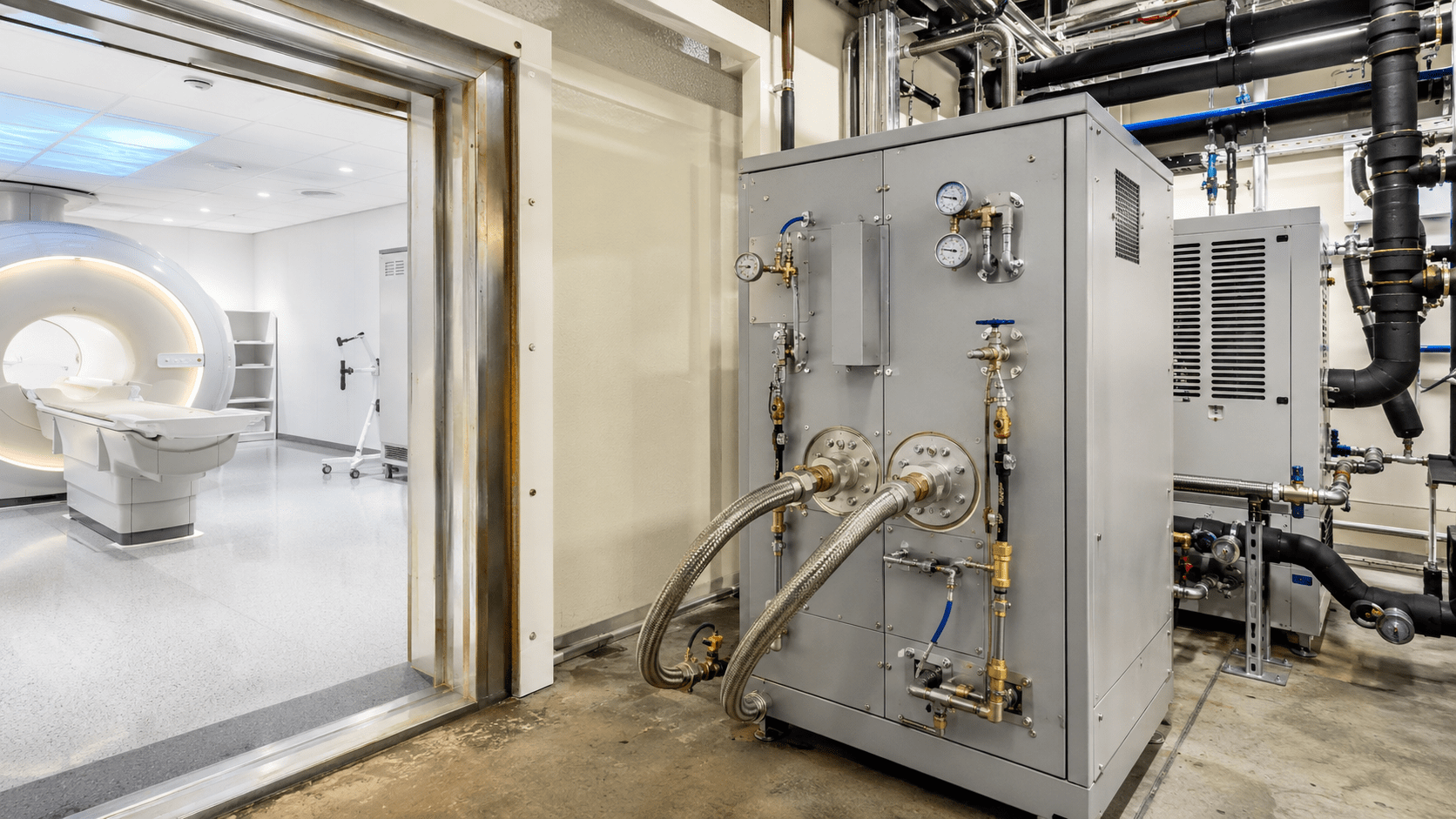
Protect Patient Care and Equipment Availability
Identify vulnerabilities supporting MRI, CT, PET, linear accelerators, and laser equipment before a cooling interruption cancels procedures or damages operating confidence.
Explore Cooling Reliability Services →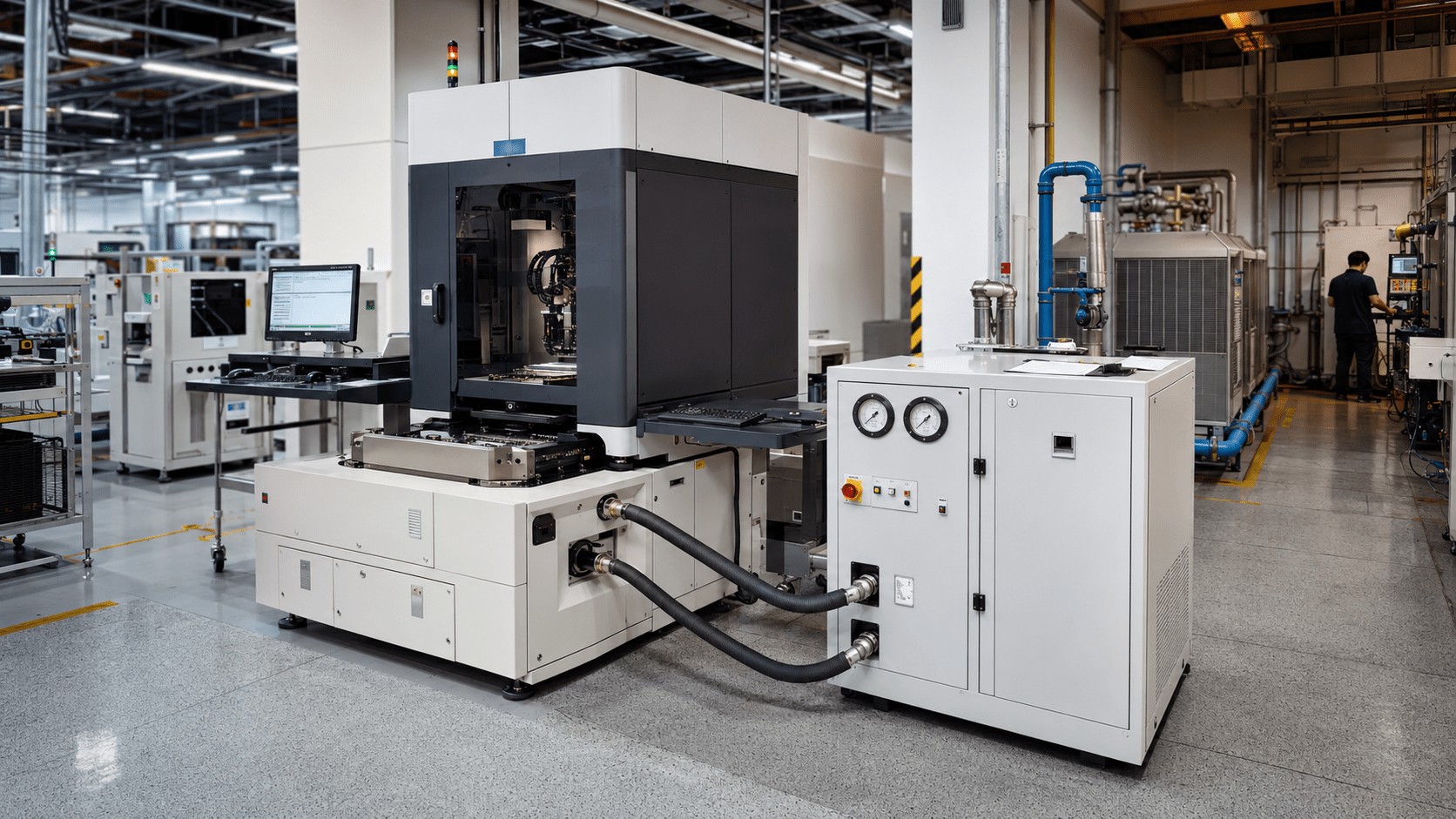
Protect Production and Test Capacity
Evaluate temperature, flow, pressure, controls, and water conditions across the complete support system for water-cooled ATE and high-value production tools.
Explore Cooling Reliability Services →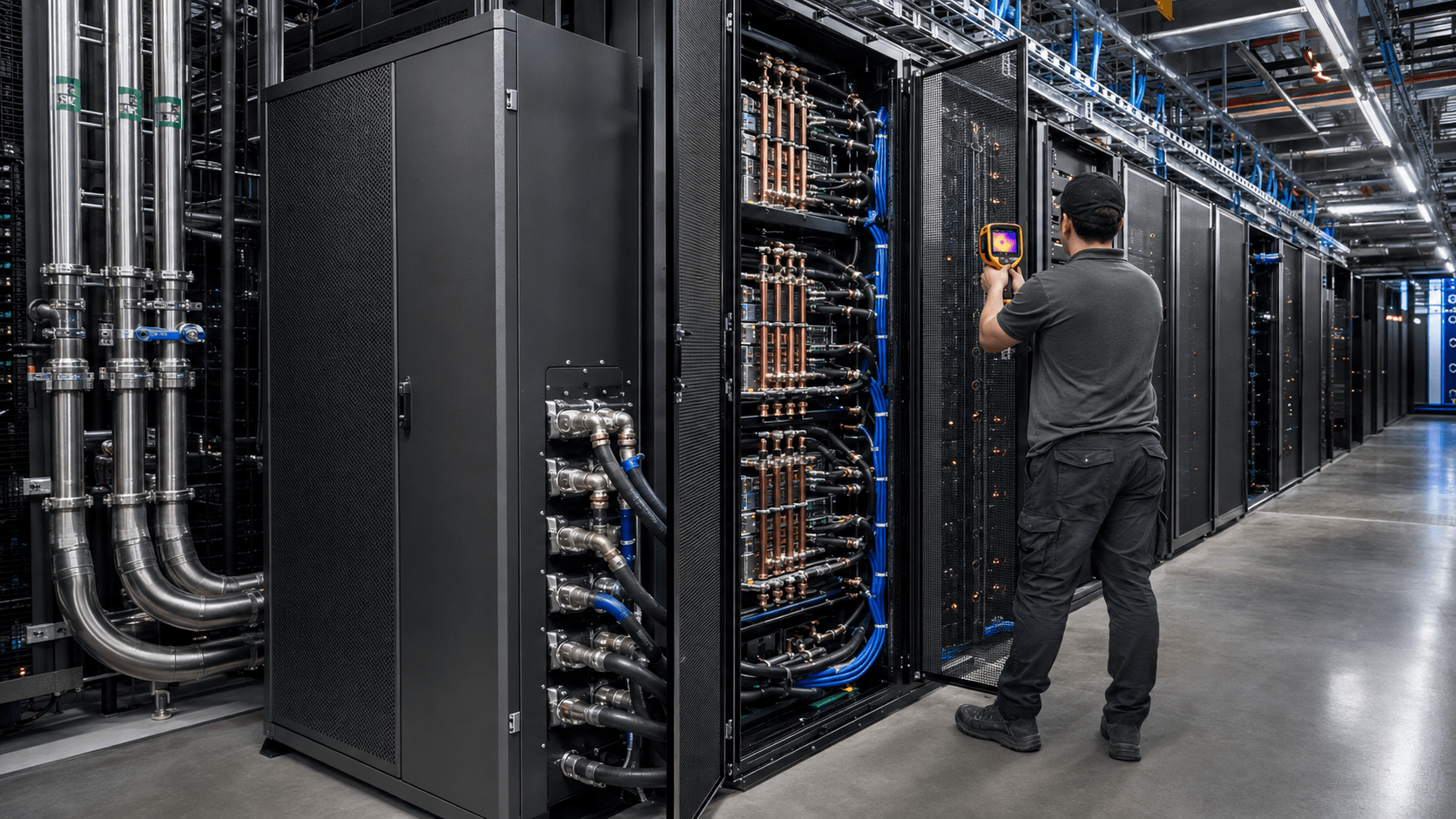
Preserve Capacity, Redundancy, and Recovery Time
Expose hidden risk across liquid cooling, CDUs, plant capacity, controls, fluid distribution, and heat rejection before reduced margin becomes an outage.
Explore Cooling Reliability Services →From Competing Theories to a Defensible Next Step
Complex cooling problems leave clues in different places. KMC² connects them into one operating picture, tests the assumptions behind the prevailing explanations, and traces the most credible path to risk.
The deliverable is not another stack of data. It is a clear explanation of what matters, why it matters, and what should happen next.
Reconstruct the System
Connect drawings, trends, alarms, sequences, service history, water conditions, field observations, and actual load behavior.
Challenge the Assumptions
Compare design intent and vendor explanations with what the system is actually being asked to do.
Trace the Failure Path
Identify the interactions most likely to erode margin or turn an ordinary fault into operational downtime.
Prioritize the Response
Separate immediate threats from longer-term improvements and give the team practical next actions.
The Right Level of Support for the Risk in Front of You
KMC² can investigate one stubborn problem, assess the broader cooling system, or provide ongoing independent oversight. Full scopes, deliverables, and fixed pricing are available on the Services page.
Find Out Why It Keeps Happening
Focus on a recent failure, recurring alarm, temperature drift, unstable condition, or technical question that needs a defensible answer.
Explore Focused Failure Analysis →See the Risks the System Is Hiding
Evaluate architecture, capacity, redundancy, controls, fluid conditions, operating margin, and the failure paths most likely to cause downtime.
Explore Reliability Assessments →Add Independent Technical Depth
Strengthen your team with recurring reliability oversight or targeted support for controls, commissioning, retrofits, validation, and complex analysis.
Explore Ongoing and Specialized Support →Real-World Cooling Reliability Case Studies
Explore how cooling risk develops across equipment, controls, fluid distribution, system transitions, and real operating conditions.
Beyond the Cold Plate: The Missing Thermal Control Plane
Why capacity alone is not enough—and how workload, silicon, rack hydraulics, CDU behavior, fluid condition, and heat rejection must operate as one system.
Read the Case Study →
MRI Cooling System Failure: The Chiller Never Alarmed
A system-level look at the conditions surrounding an MRI cooling failure—and why the absence of a chiller alarm did not mean the cooling system was healthy.
Read the Case Study →Practical Insight for the People Responsible for Uptime
The KMC² blog examines the warning signs, system interactions, and operating decisions that determine whether mission-critical cooling is genuinely ready.
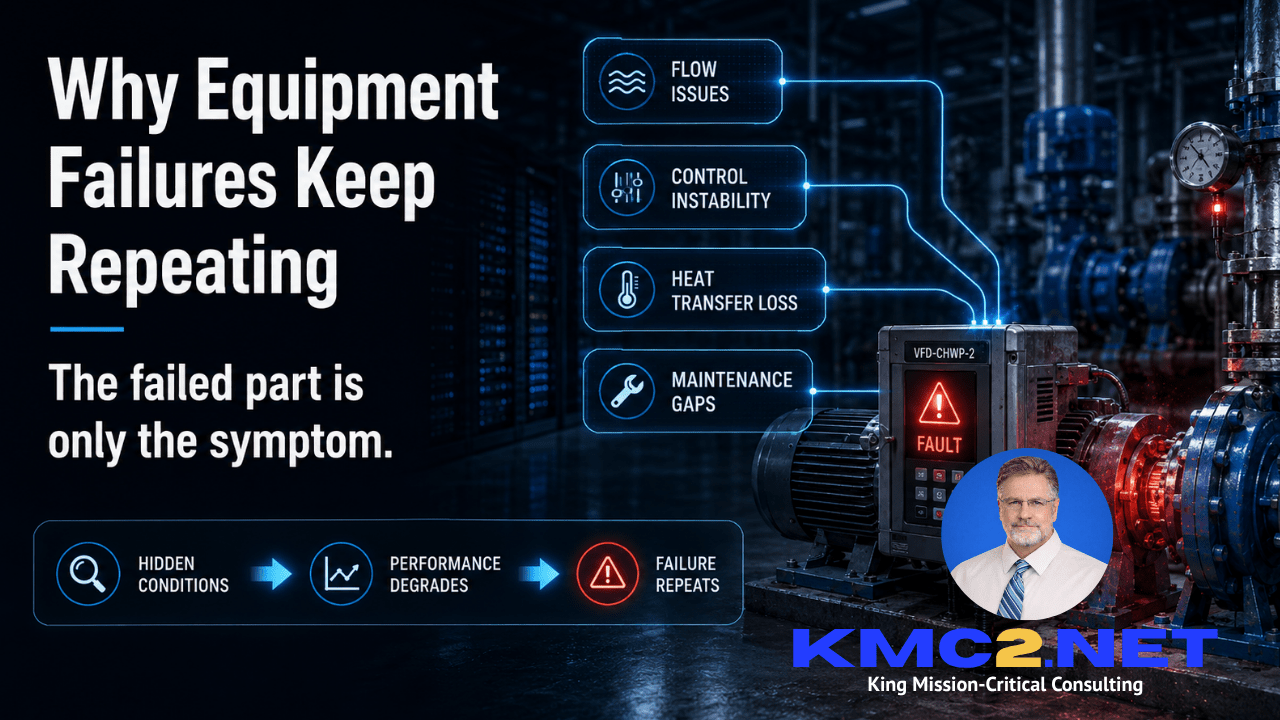
Why Data Center Equipment Failures Keep Repeating
Replacing the damaged part may restore operation without correcting the condition that caused the failure.
Read the Article →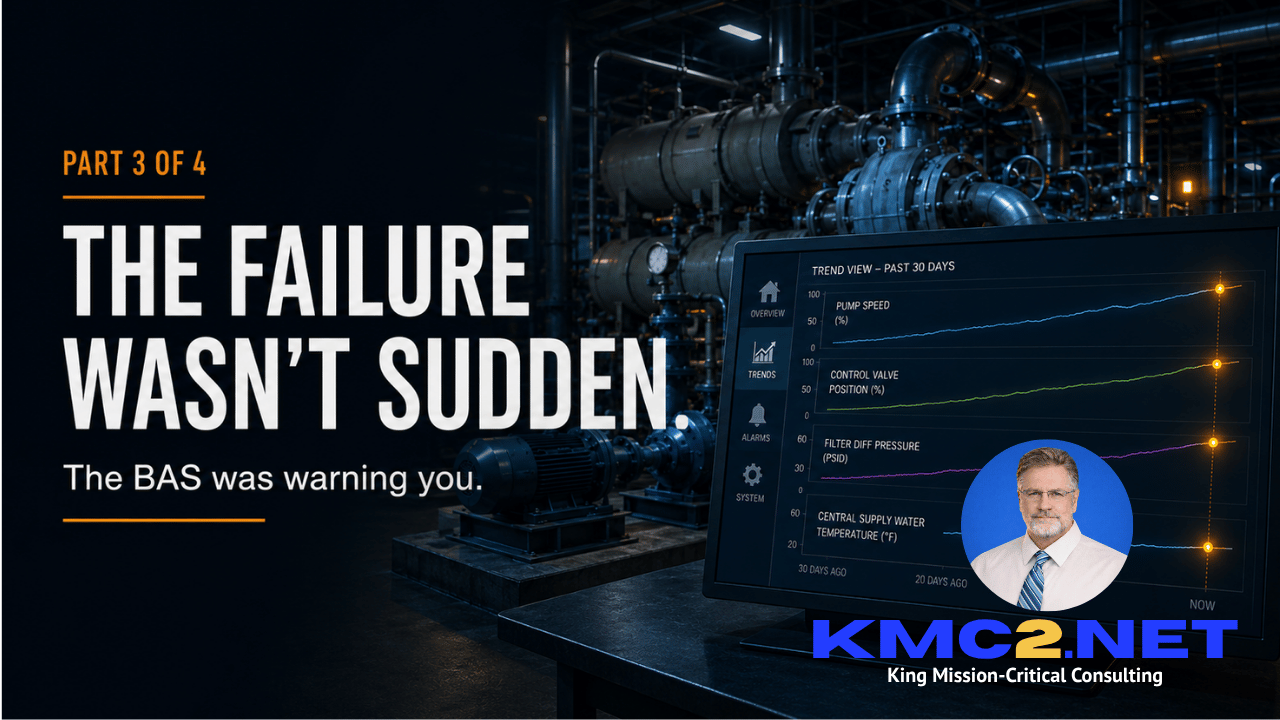
The Failure Wasn’t Sudden: The Clues Everyone Missed
The evidence often appears in pump speed, valve position, differential pressure, recovery time, and operator workarounds.
Read the Article →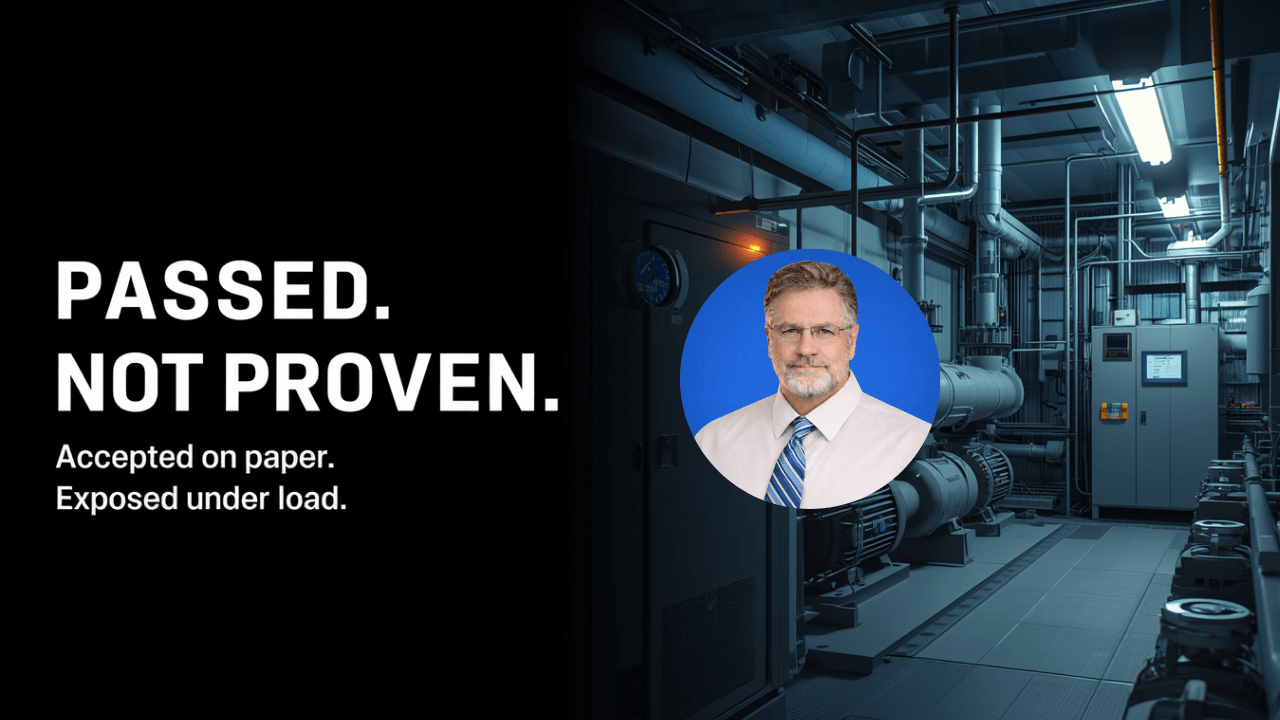
The Systems That Pass—but Fail Under Real Conditions
Startup testing can prove equipment runs without proving the complete system will carry the load through a real transition.
Read the Article →Common Questions About the First Conversation
Do I need to know which KMC² service I need?
No. Bring the cooling behavior, business exposure, what has already been tried, and the decision your team needs to make. The discovery call is designed to determine whether a defined service fits or whether a specialized scope makes more sense.
What should I have available for the discovery call?
A concise description of the problem is enough to begin. If available, it helps to know when the issue started, what changed, which equipment or loads are affected, and what explanations or corrective actions have already been proposed.
Will the call include engineering analysis?
The 30-minute call is a fit-and-next-steps conversation, not an engineering assessment. Technical analysis begins only after you approve a defined scope, deliverables, timing, and price.
Will I speak with the person doing the work?
Yes. You will speak directly with Martin P. King. There is no sales representative, junior handoff, or equipment-sales agenda. Every conclusion and recommendation is personally reviewed and validated.
Bring the Cooling Problem That Isn’t Adding Up
If the issue is consuming time, producing conflicting explanations, or putting uptime at risk, start with a focused conversation about what the system is doing and what your team needs to decide.
30-Minute Discovery Call
- Frame the cooling problem and operational exposure
- Review what has already been observed or attempted
- Determine whether KMC² can add value
- Identify the smallest sensible next step
Immediate support: (971) 236‑5622
No obligation and no open-ended consulting commitment. Any engineering work begins only after you approve the scope, deliverables, and fixed price.