

Independent, Vendor-Neutral Reliability Advisory
Cooling Reliability Case Studies: Real-World Problems. Defensible Decisions.
Cooling reliability case studies should show more than a polished outcome. They should reveal what the evidence showed, which assumptions failed, how the risk was isolated, and why the recommended next step made engineering and business sense.
The examples below draw on more than 40 years of field experience with mission-critical cooling, controls, process fluids, equipment reliability, and system recovery. Each study is written to help facility and engineering teams recognize similar exposure before it becomes extended downtime, damaged equipment, or an avoidable capital project.
- Evidence before assumptions
- Operational context included
- Actionable risk priorities
Patterns Worth Seeing Early
What These Cooling Reliability Case Studies Reveal
KMC² looks beyond the failed component to the interaction among load, flow, heat transfer, controls, fluid condition, maintenance history, and recovery behavior. That wider view often changes both the diagnosis and the investment decision.
Hidden Failure Paths
A system can remain online and still lose the margin needed to protect a critical load. These studies show how apparently normal operation can conceal escalating risk. A chiller may hold setpoint while reduced flow, fouled heat-transfer surfaces, unstable valves, or weak changeover logic quietly increase recovery time. The visible symptom is often only the final link in a chain that began much earlier.
Lost Operating Margin
Controls, heat exchangers, flow restrictions, fluid conditions, and changing loads can quietly reduce capacity long before a conventional alarm identifies the problem. KMC² cooling reliability analysis compares actual system behavior with the load, redundancy, and recovery performance the operation requires. That distinction helps separate a correctable operating condition from a genuine capacity limitation—and can prevent premature equipment replacement.
Decision-Ready Next Steps
The objective is not a longer deficiency list. It is a prioritized path that helps teams stabilize risk, verify performance, and spend capital where it produces measurable value. Findings are placed in operational context so leaders can distinguish immediate exposure, verification work, maintenance corrections, control improvements, and longer-term capital needs. For broader data-center design and operations reference, visit the ASHRAE data-center resources.
Use the cases as a diagnostic starting point
Look for the system relationship closest to your concern—not simply the equipment type. A medical imaging chiller and a data-center fluid loop may use different components, yet both can lose cooling reliability through the same pattern: restricted flow, weak heat exchange, unstable controls, inadequate trending, or a standby path that was never proven under load.
Then compare the evidence available at your site. Useful inputs may include supply and return temperatures, differential pressure, flow, valve position, pump or compressor speed, alarms, maintenance history, fluid chemistry, ambient conditions, and recovery time. A case study cannot diagnose your facility by itself, but it can expose which questions deserve attention and what data should be collected before a team commits to repair, replacement, or a larger capital plan.
Mission-Critical Cooling Case Studies
Explore the Latest Cooling Reliability Case Studies
Start with the environment or failure pattern closest to your concern. Every case is different, but together these cooling reliability case studies can help your team ask better questions, challenge incomplete assumptions, and identify where deeper review may be justified.
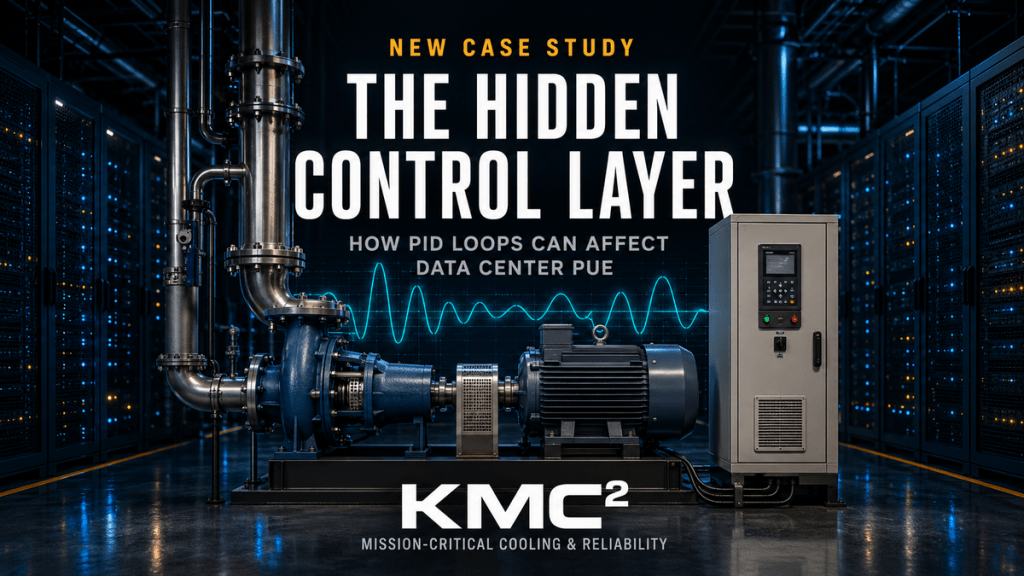
The Hidden Control-Layer Problem: How PID Loop Performance Can Affect Data Center PUE
KMC² Engineering Case Analysis The Hidden Control-Layer Problem: How PID Loop Performance Can Affect Data Center PUE This six-chiller hyperscale analysis examines how PID tuning, staging logic and synchronized trend data can affect data center…
Beyond the Cold Plate: The Missing Thermal Control Plane in AI Data Centers
Engineering Research Analysis Thermal Control Plane for AI Data Center Cooling Beyond the Cold Plate examines why GPU and SoC cooling must be evaluated by thermal response, observability, fluid integrity, and recovery—not only by steady-state…
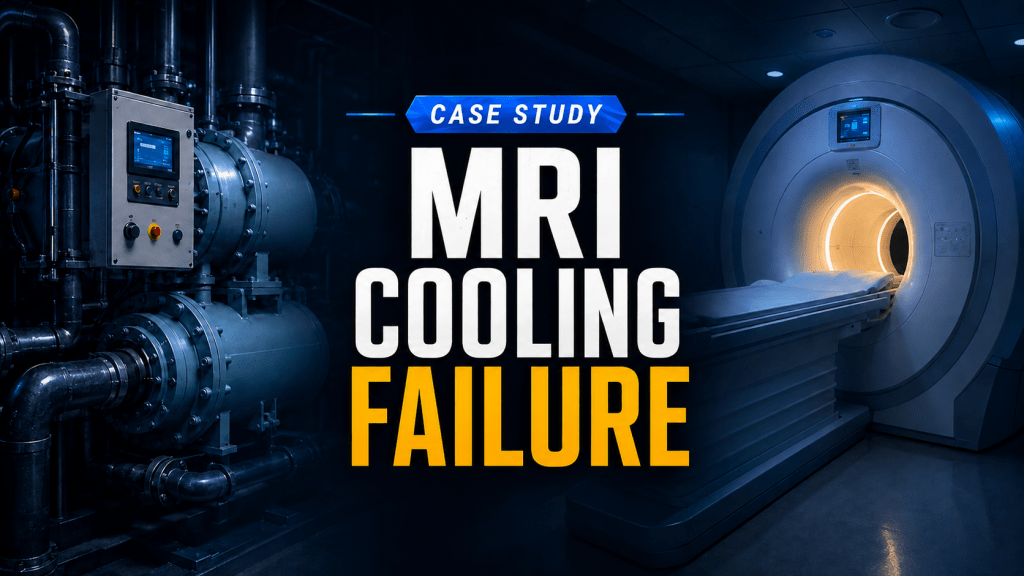
MRI Cooling System Failure: The Chiller Never Alarmed
Case Study · Medical Imaging MRI Cooling System Failure: The Chiller Never Alarmed A hidden hydraulic restriction reduced cooling-water flow to a high-use MRI—even while the process chiller stayed online, maintained leaving-water temperature, and showed…
Book a Free Cooling Reliability Consultation
Let's hop on a quick, no-strings-attached call to explore your goals and see how I can help you achieve process cooling reliability faster.