

Independent Field Notes for Critical Facilities
Mission-Critical Cooling Blog: Practical Insight From the Field
Mission-critical cooling problems rarely begin with the alarm that finally gets everyone’s attention. They develop through changing loads, restricted flow, unstable controls, lost heat-transfer performance, weak operating sequences, and warning signs that are easy to miss when each component is viewed separately.
The KMC² blog turns more than 40 years of field experience into practical reliability guidance for facility leaders, engineers, operators, service teams, and project stakeholders. The objective is not theory for its own sake. It is to help readers recognize developing exposure, ask better technical questions, and make more defensible operating and investment decisions.
- Field-informed analysis
- Vendor-neutral perspective
- Decision-ready takeaways
What We Examine
Mission-Critical Cooling Reliability Beyond the Equipment List
Reliable cooling depends on how equipment, piping, fluids, controls, alarms, procedures, and people respond together. These field notes focus on the system relationships that conventional equipment-by-equipment reviews often leave unresolved.
Failure Patterns & Root Cause
A compressor, pump, drive, valve, sensor, or heat exchanger can be the visible failure without being the originating cause. Mission-critical cooling investigations must connect maintenance history with flow, temperatures, differential pressure, staging, alarms, ambient conditions, control behavior, and changing load. The articles in this category show why restoring operation and restoring reliability are not the same outcome.
Operating Margin & Efficiency
Systems often lose capacity and efficiency gradually. A valve operating near full command, a pump approaching its available head, a fouled heat exchanger, an unstable PID loop, or an unnecessarily cold water setpoint can increase energy use while reducing resilience. KMC² field notes explain how to separate a true capacity problem from a correctable operating condition before capital is committed.
Commissioning & Proven Readiness
Successful startup and functional testing are essential, but a signed report does not guarantee that mission-critical cooling will protect the load through heat, failure, maintenance, or rapid demand changes. Articles examine automatic changeover, standby performance, alarms, controls, recovery time, and the gap between design intent and current operation. The industry guidance available through ASHRAE’s data-center resources provides additional technical context.
From Field Note to Facility Decision
Read for the pattern—not only the equipment name
A data-center liquid-cooling loop, a semiconductor test-cell chiller, and an MRI cooling system may use different equipment and support very different operations. Yet each can become vulnerable through the same underlying mission-critical cooling pattern: restricted flow, degraded heat exchange, unstable control response, poor fluid condition, incomplete trending, or a standby path that has never carried the actual load.
When an article resembles your situation, identify what evidence would confirm or disprove the pattern at your facility. Useful inputs may include supply and return temperatures, flow, differential pressure, pump or compressor speed, valve position, alarm history, maintenance records, chemistry results, ambient conditions, and recovery time. If the concern is active, compare the appropriate KMC² cooling reliability consulting services rather than assuming a blog article can diagnose the site remotely.
Independent Cooling Reliability Insight
Latest Mission-Critical Cooling Articles
Start with the topic closest to your current concern, then follow the related system patterns. New field notes are added as operating lessons, emerging technology, and recurring reliability challenges create useful questions for critical-facility teams.
Mission-Critical Cooling Reliability Blog: Latest Field Notes
-
AI Cooling Is Becoming a Power-and-Thermal System — Commissioning Has to Catch Up
AI cooling is no longer simply a mechanical system serving an IT load. Power, cooling, controls, and compute are becoming parts of the same operating system. That changes what commissioning needs to prove. For most of my career, facility power and mechanical cooling were treated as separate disciplines. Electrical engineers worried about getting power to…
-
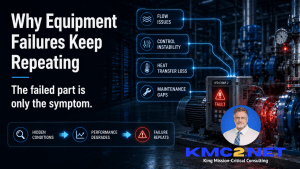
Why Data Center Equipment Failures Keep Repeating
When data center equipment failures keep repeating, replacing the failed component may restore operation—but it does not necessarily restore reliability. The failed part may only be the final link in a much longer chain of cooling, control, maintenance, and operating conditions. Get the equipment back online. The failed component is replaced. Alarms clear. Temperatures stabilize.…
-
The Failure Wasn’t Sudden: The Cooling Warning Signs Everyone Missed
Part 3 of 4 — The evidence was there before the downtime Mission-critical cooling systems rarely fail without warning. The evidence often appears weeks earlier in pump speed, valve position, differential pressure, recovery time, and operator workarounds—if anyone knows how to connect it. Forty-three days before the cooling failure, nothing was broken. The following scene…
-
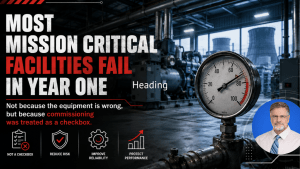
The Systems That Pass Commissioning but Fail Under Real Operating Conditions
Part 2 of 4 —Accepted is not the same as proven. The commissioning report looked clean. Pumps started. Valves stroked. Alarms came in. The chiller hit leaving-water temperature. The standby unit rotated on command. The checklist was signed, filed, and handed to the owner. Three months later, during the first real heat event, the same…
-
Mission-Critical Commissioning: Why “Passed” Does Not Mean Proven
Part 1 of 4 — The Failures That Begin After Sign-Off Why a system can pass startup and functional testing, then fail under the operating conditions that actually matter. A mission-critical compressed dry air compressor failed every four to six weeks for nearly two years. Not because the operations team ignored it. Not because maintenance…
-
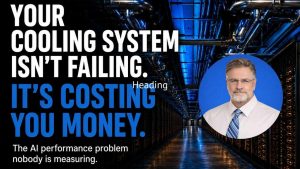
Your Cooling System Isn’t Failing. It’s Costing You Money.
The connection between cooling loop drift and AI training run overruns that almost no one is drawing. The Problem Nobody Reports The GPU didn’t fail. Nobody called an emergency. The commissioning report from eight months ago still looks clean. But the AI team’s training runs — the weeks-long computational processes of building and refining AI models —…
-
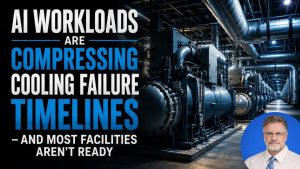
AI Workloads Are Compressing Cooling Failure Timelines — And Most Facilities Aren’t Ready
The Warning Signs Are Still There. The Window to Act on Them Isn’t. Cooling systems have always given warnings before they fail. That has not changed. What has changed is how much time you have between the first warning and the point where recovery becomes impossible. Three years ago, a developing thermal issue in a…
-
The PCW Setpoint Play That’s Saving AI Data Centers Millions in 2026
If you walk mission-critical facilities in 2026, one pattern stands out immediately. The operators quietly delivering the best PUE, WUE, and OpEx numbers aren’t chasing colder PCW setpoints. They’re strategically raising them. And in multiple hyperscale AI campuses I’ve reviewed this year, this single operational adjustment is delivering seven-figure annual savings — often with zero CapEx and…
-
“Factory Tested” Isn’t the Problem.
Where the Cost Shows Up Is.** If you spend enough time around chiller plants, you start to notice something subtle. The system meets spec.The commissioning report is clean. And yet… something doesn’t feel right once the seasons change. Not broken. Just not behaving the same way. The Part No One Pushes Back On Most process…
-
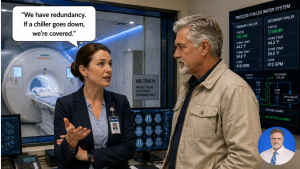
When the Chiller Trips, the MRI Clock Starts Ticking
A Director of Imaging for a major health system once told me: “We’ve got redundancy. If a chiller goes down, we’re covered.” They weren’t. Because in MRI and CT environments, a chiller failure isn’t just an HVAC event. It’s a time-sensitive stability problem. And most facilities don’t realize how little margin they actually have. The Reality Most…


Need help applying these lessons to an active concern? Explore KMC² cooling reliability consulting services or start with our mission-critical cooling reliability approach.
Book a Free Cooling Reliability Consultation
Bring a current concern, recurring failure pattern, project question, or system challenge. In a short, no-pressure conversation, we will determine whether KMC² can help you reduce cooling reliability risk before it becomes costly downtime.